Why Load Securement Matters More Than Most People Realize
If you’re searching “how to secure loads on a trailer”, you’re already taking an important safety step. Improperly secured loads are one of the most common causes of trailer accidents, damaged cargo, and roadside issues.
No matter the trailer type—enclosed, dump, deckover, or car hauler—proper load securement is essential for safe and smooth transport.
What Can Happen If a Load Isn’t Secured Properly
Loose or shifting loads create serious risks.
Common Problems From Poor Securement
- Cargo shifting during turns
- Trailer sway at highway speeds
- Damage to transported items
- Strain on trailer and tow vehicle
- Road hazards for other drivers
Even short trips require proper securement.
Step 1: Choose the Right Trailer for the Load
Load securement starts before straps are even used.
Trailer Selection Matters
- Enclosed trailers → protect items but still require tie-downs
- Dump trailers → best for loose debris but must not be overfilled
- Deckover trailers → require strong tie-downs for open loads
- Car haulers → use vehicle-specific straps
The right trailer reduces the amount of securement needed.
Step 2: Distribute Weight Evenly
Balanced loads tow better and stay secure.
Weight Distribution Tips
- Place heavier items over the trailer axles
- Avoid concentrating weight at the front or rear
- Keep side-to-side weight even
- Lower the center of gravity when possible
Even weight distribution reduces sway and improves braking.
Step 3: Use the Right Tie-Down Equipment
Not all straps are created equal.
Common Tie-Down Options
- Ratchet straps for most cargo
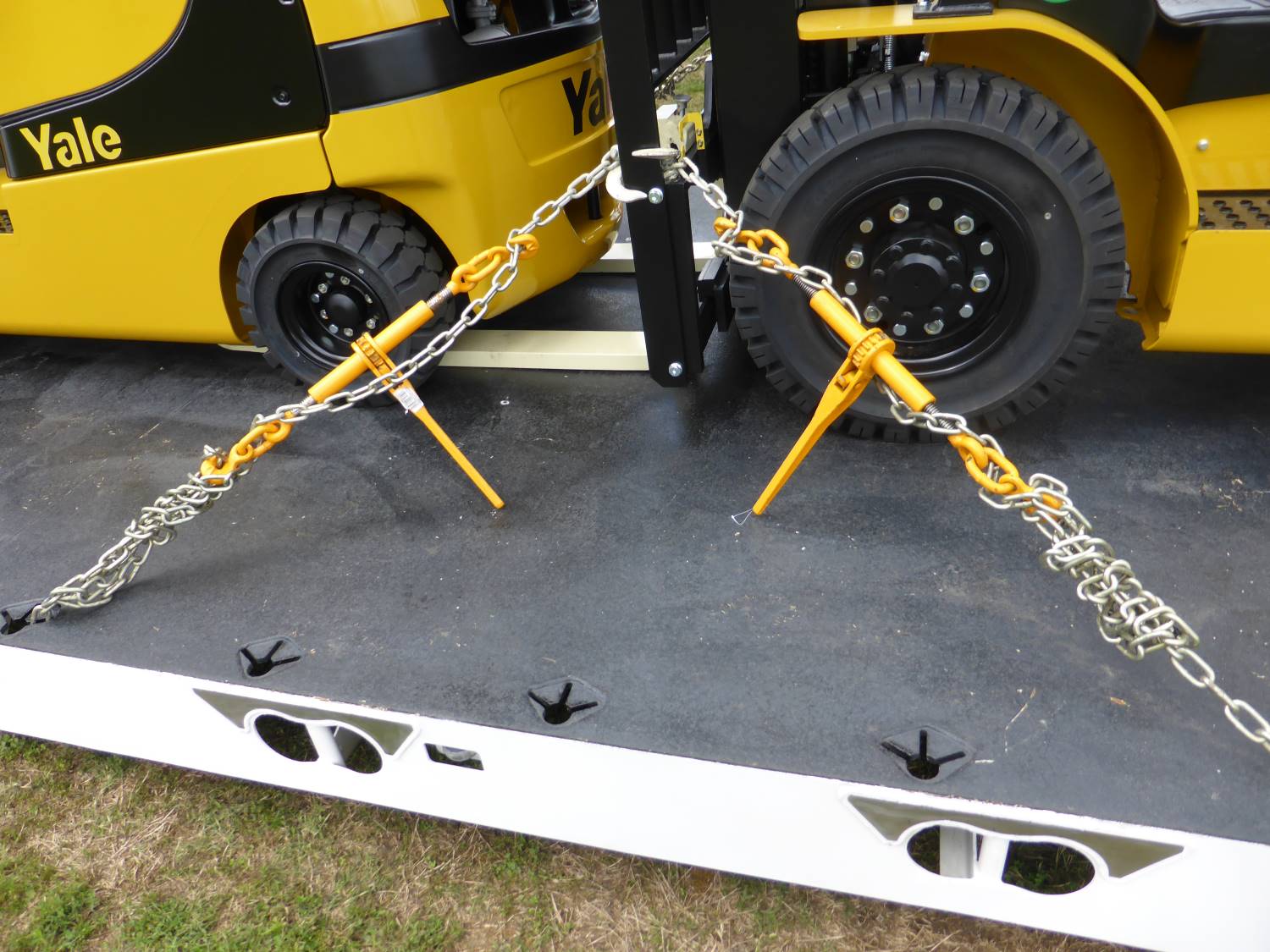
- Chains for heavy equipment
- Wheel straps for vehicles
- Bungee cords only for light stabilization—not primary securement
Always use tie-downs rated for the weight of your load.
Step 4: Secure Loads From Multiple Points
One strap is never enough.
Proper Securement Rules
- Secure items in at least two directions
- Prevent forward, backward, and side movement
- Use multiple straps for large items
- Tighten evenly to avoid shifting
The goal is zero movement during transport.
Securing Loads on Enclosed Trailers
Enclosed trailers hide movement—but don’t prevent it.
Enclosed Trailer Tips
- Use interior D-rings
- Strap items to walls or floor anchors
- Prevent items from sliding forward during braking
- Separate fragile items
Even inside a trailer, cargo must be secured.
Securing Loads on Dump Trailers
Dump trailers often carry loose material.
Dump Trailer Securement Tips
- Do not overload above trailer sides
- Distribute debris evenly
- Cover loads if required
- Secure large items separately
Loose debris can shift quickly during transport.
Securing Loads on Deckover Trailers
Deckover trailers require extra attention.
Deckover Securement Tips
- Use multiple straps or chains
- Cross-strap equipment when possible
- Secure from all four corners
- Lock moving parts or attachments
Open decks mean nothing stops movement except proper tie-downs.
Securing Vehicles on Car Hauler Trailers
Vehicles must be secured correctly to prevent damage.
Vehicle Securement Tips
- Use wheel straps or axle straps
- Secure all four corners
- Center the vehicle on the deck
- Check strap tension after a short drive
Vehicle movement during transport can cause serious damage.
Step 5: Double-Check Before Driving
A final check prevents issues.
Pre-Trip Checklist
- Tug on each strap
- Confirm nothing moves
- Check trailer lights and brakes
- Recheck straps after the first few miles
Loads often settle during the first part of the trip.
Common Load Securement Mistakes
Avoid these frequent errors:
- Using too few straps
- Overloading trailers
- Relying on gravity alone
- Skipping mid-trip checks
Most problems come from rushing the process.
Why Proper Securement Saves Time and Money
Secure loads:
- Prevent damage to cargo
- Reduce accident risk
- Improve towing control
- Avoid roadside delays or fines
Taking extra minutes upfront saves hours later.


.svg)
.svg)